Alright, let's be real. You're not just here to learn a couple of fancy words. You've probably heard someone in the lift line brag about yesterday's "blower pow" or seen a ski film title screaming about "cold smoke," and you nodded along while secretly thinking, "Wait, what does that even mean?" I've been there. The world of skiing powder slang can feel like a secret club, and the password is a bizarre vocabulary that seems to change by the mountain.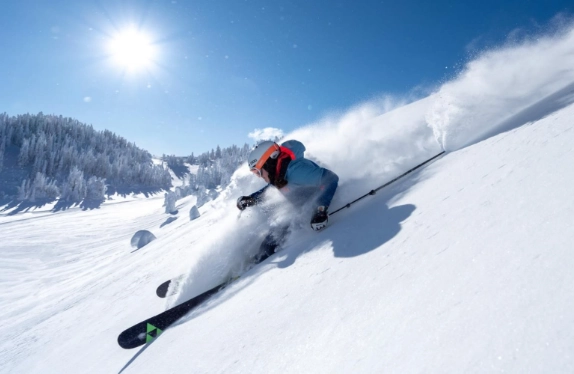
Your Powder Lingo Cheat Sheet
- The Core Vocabulary: Non-Negotiable Powder Lingo
- Breaking Down the Snow: A Powder Condition Table
- Modern & Niche Powder Slang
- Where in the World to Find the Best of This Slang (And the Snow)
- Common Questions About Powder & Its Lingo (FAQ)
- Putting It All Together: How to Sound Like You Know Your Stuff
Why does this slang even exist? Think about it. How do you describe the indescribable? "Good snow" doesn't cut it when you're talking about the difference between surfing through bottomless fluff and struggling in wet cement. Skiing powder slang evolved out of pure necessity—to pinpoint the exact quality of the white gold beneath our feet. It's practical poetry.
The Core Vocabulary: Non-Negotiable Powder Lingo
These are the terms you'll hear everywhere, from Jackson Hole to Niseko. Master these, and you'll be fluent in the basics of skiing powder slang.
The Classics (The Foundation)
Pow / Pow Pow: The universal short form. Simple, effective. "The pow was deep today." It’s the bread and butter of skiing powder slang.
Freshies / Fresh Tracks: This refers to untouched snow. Getting "first tracks" or skiing on "freshies" is the ultimate goal, the holy grail. It's that pristine canvas before anyone else draws a line on it. The pursuit of freshies is what gets people hiking for dawn patrol.
Face Shots: Not just a description, but a unit of measurement for good snow. If the powder is so deep that it flies up and hits you in the face with every turn, you're getting face shots. Consistent face shots are the benchmark for an epic day. I remember a day at Alta where it was so deep, I was getting face shots on a cat track. Unreal.
Blower / Blower Pow: This is the dream. Extremely light, dry powder that "blows" up around you with minimal effort. It's not heavy or sticky. When you kick it, it poofs into the air like smoke. This is often the result of very cold temperatures during the snowfall. Finding true blower pow is a rare and glorious event.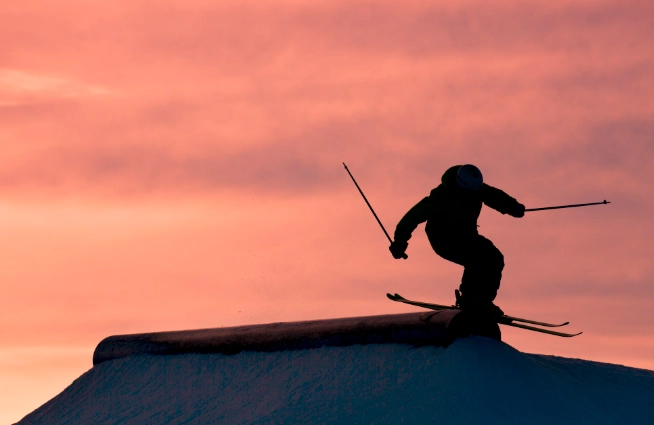
The Descriptive & Atmospheric Terms
Cold Smoke: Arguably the most poetic piece of skiing powder slang. Coined and popularized by the legendary ski filmmaker Warren Miller, it describes the lightest, driest powder imaginable. It's so light that when you ski through it, it billows up like cold smoke from a chimney. It's essentially the pinnacle of blower pow. You don't just ski cold smoke; you feel like you're dissolving into it.
Champagne Powder®: This is a trademarked term, specifically for the famously light, dry snow found in Steamboat Springs, Colorado. They didn't just make it up for marketing; the snow crystals there often form in a unique way due to the local climate, resulting in that incredibly dry, sparkling quality. It's a specific type of blower pow that has earned its legendary status. You can read more about the unique snow science behind it from the Steamboat Resort itself.
Dust on Crust: The reality check. This is when a very thin layer of new snow (the "dust") covers a hard, icy base (the "crust"). It's tricky, often slippery, and can be a real letdown after hoping for a powder day. It requires a careful, more technical ski style.
Sierra Cement / Cascade Concrete: Regional slang for heavy, wet snow common in the Sierra Nevada and Pacific Northwest mountains. It's high-moisture snow that falls at temperatures near freezing. It's dense, can be slow, and is exhausting to ski in if you're not used to it. But man, when it sets up, it can make for some incredibly stable and fun skiing—it's just a different beast altogether.
That's where it gets interesting. The type of skiing powder slang you use often depends on the depth and your experience in it.
Depth-Based Slang
Ankle-Deep / Shin-Deep: A nice refresher, but not a true powder day. Good for practicing technique.
Knee-Deep: The official start of a proper powder day. This is where the fun begins and you start to feel the float.
Waist-Deep / Chest-Deep: Now we're talking. This is deep. Turns become slower, more deliberate, and the sensation of floating is overwhelming. Stopping requires planning.
Bottomless / Swimming: The ultimate. The snow is so deep you genuinely cannot feel the bottom or any obstacles beneath you. You are, for all intents and purposes, swimming through snow. Every turn is a commitment. It's equal parts exhilarating and physically demanding.
Breaking Down the Snow: A Powder Condition Table
To really get it, let's visualize how these terms relate to each other. This table breaks down the key types of powder snow you'll encounter, their slang names, and what it actually feels like to ski them. This is the practical guide you'll wish you had sooner.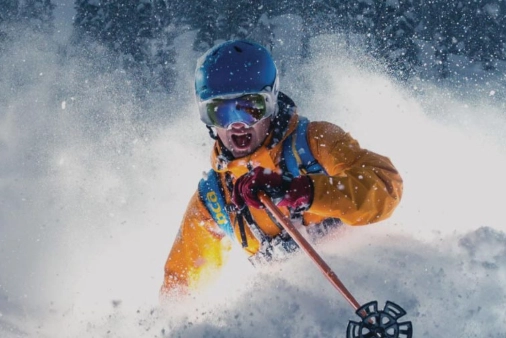
| Slang Term | Snow Type / Density | Typical Feel & Sound | Best For... | Watch Out For... |
|---|---|---|---|---|
| Cold Smoke / Blower Pow | Extremely low density, very dry (<5% water content) | Silent, effortless. A soft 'whoosh'. Snow explodes like dust. | Effortless floating, playful turns, low impact. | Wind can scour it away quickly. Hard to find anchors in steep terrain. |
| Champagne Powder® | Very low density, dry, distinctive crystal form | Similar to blower but with a unique, sparkling quality. A signature of Steamboat. | All-day floatation and consistent, predictable turns. | Mostly specific to certain regions (like Colorado's Yampa Valley). |
| "Regular" Pow | Medium-low density, dry to slightly moist | The classic powder feel. A satisfying 'thump' with each turn. | Versatile, fun, forgiving. The gold standard for most. | Can get tracked out and choppy faster than blower. |
| Sierra Cement / Cascade Concrete | High density, wet, high water content (often 10%+) | Heavy, quiet 'swoosh'. Skis plane on top, can feel slow. | Building jumps, stable base, great for carving. | Extremely fatiguing. Can set up into an impenetrable crust if it refreezes. |
| Dust on Crust | Thin low-density layer on hard ice | Scraping sound over the crust, unpredictable grip. | Technical practice, making the most of a marginal day. | Very easy to catch an edge and fall. Not much fun. |
See? It's not just about cute names. Each term in that skiing powder slang lexicon gives you critical intel. Hearing someone say they found "blower pow in the back bowl" tells you way more than just "there was snow." It tells you about the effort required, the potential for face shots, and the likely quality of the turns.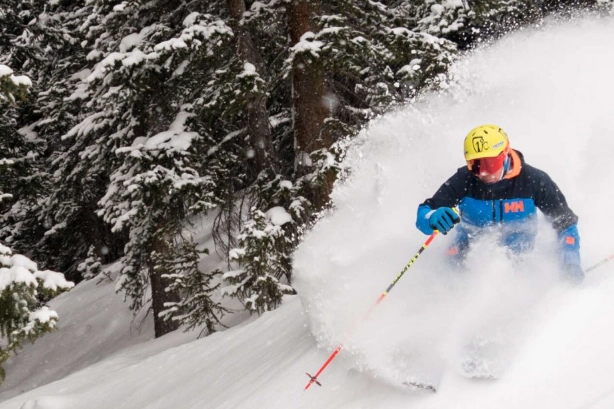
Modern & Niche Powder Slang
The language keeps evolving. With the rise of social media and new school skiing, fresh terms are always popping up.
POW (all caps): More of a social media battle cry than a descriptive term. Used in posts and captions. "#POWDAY" "CHASING THE POW." It's the digital version of yelling from the rooftops.
Snorkel Deep / Tits Deep: Vulgar but vividly descriptive terms for extremely deep snow. Self-explanatory in their imagery.
Pitted: A term from the snowboarding world that has crossed over. It means being so enveloped in the snow during a turn or in a feature that you're "in the pit" of it. "So pitted!" as the famous surfer would say.
Pow Surfing / Fat Skiing: While not slang for the snow itself, these are activities defined by specific powder conditions. Pow surfing (riding a very short, wide board with no bindings) is best in deep, stable blower. Fat skiing (on skis 110mm+ underfoot) is the tool for managing any deep snow, but especially heavier varieties.
A quick reality check: Don't be the person who overuses the rarest slang incorrectly. Nothing marks you as a gaper faster than calling Sierra Cement "cold smoke" or referring to 2 inches of dust as "blower pow." Use the terms that honestly fit what you're skiing.
Where in the World to Find the Best of This Slang (And the Snow)
The skiing powder slang you hear is often shaped by geography. Different regions breed different snow and different dialects.
- Japanese Alps (Hokkaido, Hakuba): The holy land for Japow (a portmanteau of Japan and Powder). It's legendary for its consistent, incredibly light, dry snow—some of the best cold smoke on the planet. The maritime snowpack can be deep and dangerous, so always check avvy forecasts from the Japan Tourism Agency and local guides.
- Rocky Mountains, USA/Canada (Utah, Colorado, British Columbia, Wyoming): The birthplace of many classic American terms. You'll find everything from Champagne Powder® in Steamboat to the famously dry Utah powder ("The Greatest Snow on Earth") and the deep, often heavier coastal snow in BC's interior. Resources like Avalanche Canada are indispensable for backcountry travel here.
- The European Alps (France, Switzerland, Austria): The culture is a bit different, with perhaps less flamboyant slang, but the pursuit is the same. You'll hear talk of "poudreuse" (French for powder) and epic dumps. The snow can vary from very light at high altitude to heavier at lower resorts.
- Patagonia (Chile/Argentina): Remote, wild, and home to some of the most challenging and rewarding powder on earth. The slang here is often a mix of Spanish and borrowed English, but the stoke is universal.
I had a trip to Hokkaido a few years back that redefined my understanding of deep snow. We got a meter of Japow overnight. It wasn't just skiing; it was like tunneling through a silent, white maze. The local guides had their own terms for the different layers, which just shows how deep the rabbit hole of skiing powder slang can go.
Common Questions About Powder & Its Lingo (FAQ)
Putting It All Together: How to Sound Like You Know Your Stuff
So, you've absorbed the dictionary. How do you use this skiing powder slang without sounding like you're trying too hard?
Be observational, not declarative. Instead of walking into the lodge and announcing "THE POW IS BLOWER TODAY!" try something more casual and specific. "Man, that north-facing stuff off the summit was still holding some nice, cold smoke." or "Found some surprisingly deep pockets in the trees, totally bottomless back there." It shows you were paying attention to the nuances.
Listen more than you speak. The old-timers at the bar or the local patrollers will often have the most accurate, nuanced take on the day's conditions. You'll hear them differentiate between the wind-loaded "chalk" on a ridge and the protected "fluff" in the glades. That's advanced-level skiing powder slang in action.
Ultimately, this language exists to share stoke and information. It's the shorthand for a shared experience. When you finally have that perfect day—the kind where you're getting consistent face shots in bottomless cold smoke with your friends—you won't need a lot of words. A grin, a nod, and a simple "That was all-time" will say it all. Because now, you're not just using the slang; you've lived it. And that's the whole point.
The next time you're scanning the forecast or listening to the morning report, you'll hear more than just words. You'll hear a promise, a warning, or a story. You'll know if you should grab your fattest skis or maybe just sleep in. That's the power of understanding the rich, evolving, and utterly essential world of skiing powder slang. Now go get some.