Guide Highlights
- Why Bother With Drills? The Foundation of Good Skiing
- The Absolute Must-Know: Your Ski Stance
- The Essential Beginner Ski Drills: A Step-by-Step Progression
- Putting It All Together: Your First Real Run
- Common Beginner Questions & Mistakes (And How to Fix Them)
- Your Practice Plan: From Zero to Green Run Hero
Ever felt like your skis have a mind of their own? You're not alone. I remember my first time on skis—I spent more time on my backside than actually sliding downhill. It was frustrating, a bit embarrassing, and honestly, my knees were killing me the next day. But here's the thing nobody tells you when you're starting out: skiing isn't just about pointing your tips downhill and hoping for the best. It's a skill, and like any skill, you can break it down into manageable, learnable pieces. That's where ski drills for beginners come in.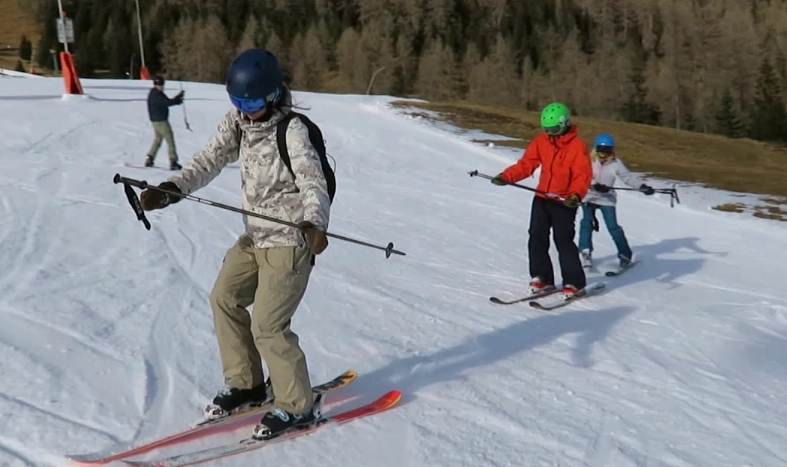
These aren't magic tricks. They're simple, repetitive exercises designed to build muscle memory and confidence. Think of them as the scales a musician practices or the dribbling drills a basketball player does. Boring? Maybe a little. Absolutely essential? One hundred percent. Skiing well is about control, not speed. And control is built from the ground up, starting with the most fundamental movements.
This guide is the one I wish I'd had. We're going to move beyond vague advice like "just bend your knees" and get into the specific, actionable drills that professional instructors use with their first-timers. We'll cover everything from finding your balance on flat snow to making your first controlled turns and, most importantly, learning how to stop safely. Because let's be honest, stopping is pretty high on the priority list.
Why Bother With Drills? The Foundation of Good Skiing
You might be eager to just get on the chairlift and go. I get it. The mountain is calling. But skipping the foundational work is like trying to build a house on sand. It might look okay for a minute, but the first real challenge—a steeper slope, some tricky snow—will expose the weaknesses.
Good ski drills for beginners do a few critical things. First, they teach your body what a proper athletic stance feels like. Skiing isn't a passive activity; it's a dynamic, balanced position. Second, they isolate movements. Turning on skis isn't one big motion; it's a sequence of smaller ones—weight shift, edge engagement, rotation. Drills let you practice each piece separately before putting it all together. Finally, they build confidence in a low-pressure environment. Practicing a hockey stop on a gentle slope is a lot less terrifying than trying to figure it out halfway down a blue run.
The Absolute Must-Know: Your Ski Stance
Before we jump into any specific ski drills for beginners, we have to talk about posture. This is the home base your body returns to. Get this wrong, and everything else is an uphill battle.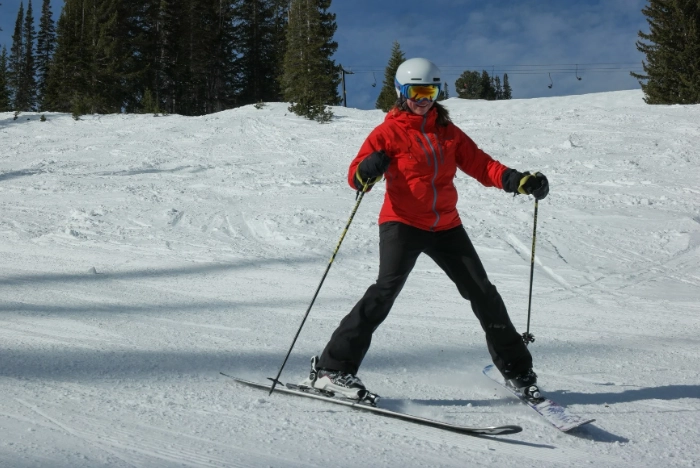
Forget standing straight up. Forget leaning back in a "relaxed" pose. The proper ski stance is active and ready. According to the Professional Ski Instructors of America (PSIA-AASI), the governing body for ski instruction in the U.S., the fundamental stance is the foundation for all skiing. Here's how to find yours, even before you click into your bindings:
- Feet Shoulder-Width Apart: Not too narrow, not too wide. Imagine the skis are extensions of your feet.
- Ankles, Knees, and Hips Slightly Flexed: This is the famous "bend your knees" part, but it's more of a gentle, athletic squat. You should feel springy, like you're about to jump sideways.
- Weight on the Balls of Your Feet: This is crucial. If your weight is in your heels, you're a passenger. On the balls of your feet, you're the driver. A great way to check is to try lifting your toes inside your boots.
- Hands Forward and Visible: Hold your hands in front of you, as if you're carrying a large tray. This naturally keeps your chest facing downhill and your weight forward.
- Spine Neutral, Eyes Up: Don't hunch. Look ahead down the slope, not at your ski tips. Your body goes where your eyes look.
Spend a few minutes just holding this stance on flat ground. Feel the muscles in your legs engage. This posture is your control center for all the upcoming beginner ski drills.
The Essential Beginner Ski Drills: A Step-by-Step Progression
Okay, you're clicked in, you've found your stance on a nice, gentle, flat beginner area (often called the "magic carpet" zone). Let's start moving. This progression takes you from total novice to linking turns. Don't rush it. Master each step before moving on.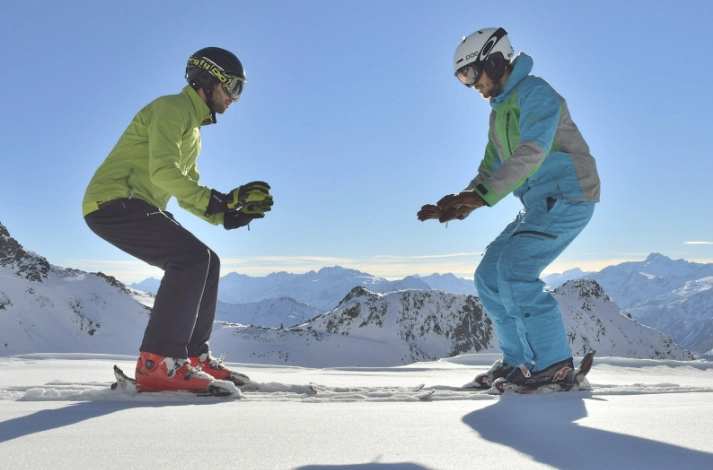
Phase 1: Foundation & Feel (Flat & Very Gentle Terrain)
These first drills are all about getting comfortable with the equipment and basic movements. They're not glamorous, but they're the bedrock.
Skiing in a Box (The Gliding Wedge)
This is often the very first skiing movement taught. It's not a turn, it's a controlled, slow descent.
- The Goal: To feel your edges engaging to control speed, forming the basic "pizza" or snowplow shape.
- How-To: From your athletic stance, gently push your heels out, bringing your ski tails apart while keeping the tips close together. Your skis will form a wide "V" or a slice of pizza. Apply gentle, even pressure to both skis' inside edges. You should start sliding forward very slowly. To stop, just push your heels out a bit more to increase the wedge angle and edge pressure.
- Common Mistake: Leaning back. This takes pressure off your edges and you lose control. Keep your hands forward!
This is the cornerstone of all beginner ski drills. Spend time here. Make your wedge wider, make it narrower. Feel how the edge pressure controls your speed. Wondering how to stop safely? This drill teaches you the primary stopping method for new skiers.
Side Stepping & Herringbone Uphill
How do you get back up the tiny slope you just came down? You need to know how to move sideways and uphill.
Herringbone: For steeper little climbs. Point your ski tips outwards in a wide V, and walk uphill, placing each ski down so its inside edge bites into the snow. It looks a bit silly, but it works.
These movements are fundamental for managing terrain and getting yourself into position for the next run. They're also fantastic for building edge awareness.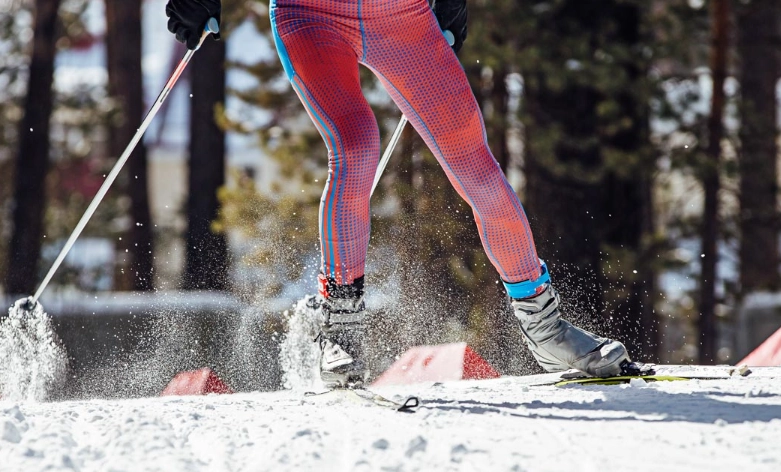
Phase 2: Introduction to Turning (Gentle Green Slopes)
Now we start to change direction. The key here is understanding that turning starts with your feet and legs, not your shoulders.
The Falling Leaf
This is one of my favorite ski drills for beginners. It teaches weight transfer and edge control without the commitment of a full turn.
- The Goal: To slide diagonally across the slope, then switch edges and slide the other way, like a leaf falling back and forth.
- How-To: Start in a gentle gliding wedge, facing diagonally across the slope. Gently put more weight on your downhill ski (the one closest to the bottom of the slope). You'll start to curve slightly. To go the other way, transfer your weight to the other ski and let your edges switch. Your body should stay facing downhill; let your legs do the work underneath you.
- Why It's Great: It removes the fear of pointing straight down the fall line. You're always moving across the hill, in control. It builds incredible confidence in shifting your weight from one ski to the other.
Wedge Turns (The "Pizza" Turn)
This is where it all starts to come together. You'll use your gliding wedge to initiate a change of direction.
- The Goal: To make a controlled, rounded turn from one diagonal across the hill to the other.
- How-To: Start in a gliding wedge, sliding straight. To turn right, apply more pressure to your left ski. This will cause you to arc to the right. Look where you want to go (to the right). As you complete the turn and are facing the other diagonal, re-center your weight to slow down, or immediately pressure the other ski to start a turn left.
- The Aha Moment: The turn happens because you weighted one ski more than the other. It's not about twisting your upper body. Focus on the feeling of your outside leg (the one you're pressuring) getting longer and stronger through the turn.
Practice linking these turns: right turn, left turn, right turn. Focus on making smooth, round shapes, not sharp zig-zags. This is the primary skill you'll use on green runs.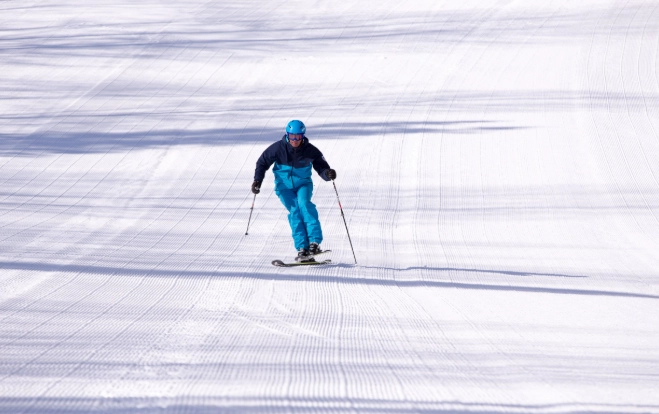
Phase 3: Building Control & Refinement (Steeper Greens/Easy Blues)
Once wedge turns feel comfortable, it's time to refine the movement and prepare for parallel skiing.
Garland Turns (or "J-Turns")
This drill bridges the gap between wedge turns and parallel turns. It's a partial turn that emphasizes finishing the turn with your skis across the hill.
- The Goal: To start a turn from a traverse, complete the first half, and then slide back into a traverse, creating a "J" or garland shape in the snow.
- How-To: Start sliding diagonally across the slope (a traverse). Initiate a turn as you would for a wedge turn, but focus on rolling your ankles and knees to bring your skis onto their edges. Complete about half the turn until you are facing slightly downhill, then let your skis flatten and slide back into a traverse. Repeat. You're essentially practicing the initiation and edge engagement of a turn without doing the full 180 degrees.
The Hockey Stop
This is the ultimate control drill. It's flashy, it's effective, and it's a game-changer for confidence. It's also one of the more advanced ski drills for beginners, so approach it with patience.
- The Goal: To stop quickly and decisively by pivoting your skis sideways and digging your edges in.
- How-To (on a gentle slope!): Start sliding slowly straight downhill. Quickly and aggressively pivot your heels to one side, swinging your ski tails around so both skis point across the hill. As you pivot, bend your knees deeply and press down hard on your edges. You'll stop with a satisfying spray of snow.
- Personal Warning: This drill can be jarring on your knees if you do it wrong (trust me, I've felt it). Don't try to muscle it with your upper body. The power comes from a strong, quick leg rotation and a deep knee bend to absorb the force. Start with little pivots and work up to a full stop.
Putting It All Together: Your First Real Run
So you've practiced your drills on the learning slope. How does this translate to an actual green run? Here's a mental checklist:
- Ride the Lift, Unload Smoothly: Don't overthink it. As you approach the top, stand up, keep your ski tips up, and let the chair gently push you forward onto the flat.
- Find a Safe Spot to Start: Sidestep or skate to a spot where you have a clear, gentle slope below you.
- Assume Your Stance: Hands up, knees bent, weight forward.
- Start with a Gliding Wedge: For the first few yards, just get moving in a controlled wedge. Get a feel for the snow.
- Look Ahead and Plan: Pick a spot where you want to make your first turn. Don't stare at the skis in front of you.
- Link Your Wedge Turns: Use the turns you drilled. Right turn to control speed, then left turn. Focus on smooth, round shapes.
- Finish Across the Hill: Try to end each turn with your skis pointing across the slope, not straight down. This is your natural brake.
- Take Breaks: If you pick up too much speed or feel panicky, make a bigger wedge or even sidestep to a stop. Regroup. There's no rush.
The goal isn't to get down the mountain fast. The goal is to get down the mountain in control, using the techniques you practiced. Every run is just an extension of those fundamental ski drills for beginners.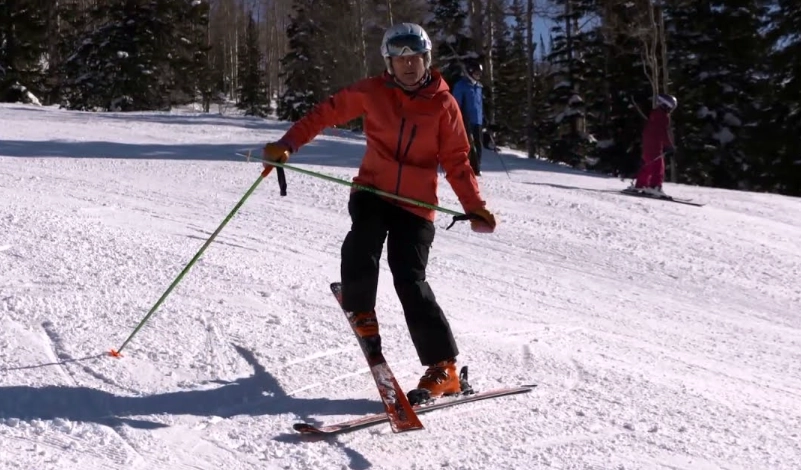
Common Beginner Questions & Mistakes (And How to Fix Them)
Your Practice Plan: From Zero to Green Run Hero
Here’s a sample framework for your first 2-3 days on snow. Adjust based on fatigue and conditions.
| Session Focus | Key Drills to Practice | Goal for the Session | Terrain |
|---|---|---|---|
| Day 1 - Foundation | Athletic Stance, Gliding Wedge, Side Stepping, Straight Run & Wedge Stop | Feel control over speed and direction. Be able to stop confidently every time. | Flat "magic carpet" area & very gentle slope. |
| Day 2 - Introduction to Turning | Review Gliding Wedge, Falling Leaf, Wedge Turns (right & left) | Link 3-4 consecutive wedge turns without stopping. Control speed with turn shape. | Gentle, wide green slope. |
| Day 3 - Building Fluency | Garland Turns, Linked Wedge Turns with rhythm, Introduction to Hockey Stop (slow) | Ski a full green run top-to-bottom with linked, controlled turns. Use a hockey stop to end your run. | Longer, consistent green run. |
The journey from shaky first steps to confidently cruising a green run is one of the most rewarding experiences in sports. It's not about being the fastest or the most aggressive. It's about the quiet satisfaction of movement and control. Those seemingly simple ski drills for beginners are the secret code that unlocks the mountain. They build the neural pathways and muscle memory that turn panic into poise.
So next time you're on the snow, give yourself permission to drill. Find a quiet corner of a beginner slope and work on your falling leaf or your garlands. It might feel like you're not making progress, but you are. You're building the foundation for a lifetime of enjoyable skiing. And when you finally link those turns together and feel the rhythm of the mountain, you'll understand why we all put up with the cold, the cost, and the occasional spectacular fall. It's worth it.