So you're standing at the top of a beginner slope, or maybe you're watching videos and planning your first trip, and the question hits you: what are the 5 skills in skiing that everyone keeps talking about? It's not just some random list instructors throw around to sound smart. Nailing these five things is literally the difference between a day spent wrestling with your skis and a day spent floating down the mountain with a grin on your face.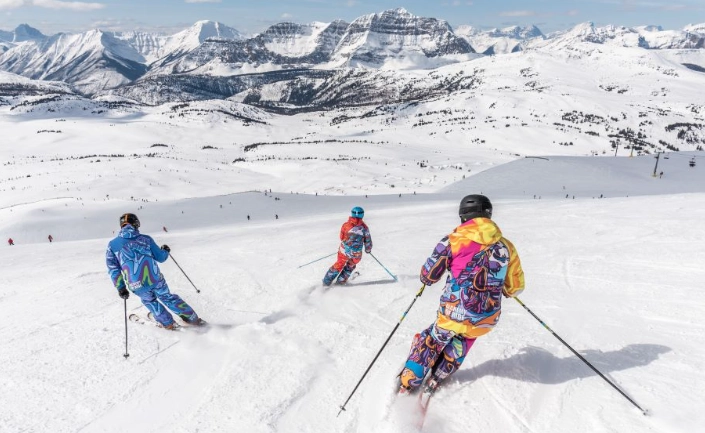
I remember my first lesson. The instructor said we'd work on "the five skills," and I nodded like I knew what he meant. Inside, I was just hoping not to faceplant in front of everyone. It took me a couple seasons of frustration (and yes, a few spectacular falls) to really get how these pieces fit together. That's what I want to save you from.
Here's the core idea: Modern ski instruction, especially through organizations like the Professional Ski Instructors of America & American Association of Snowboard Instructors (PSIA-AASI), structures learning around a "five fundamental skills" model. It's not about five tricks. It's about five interconnected abilities that, when developed together, give you control, safety, and fun.
Let's cut through the jargon. When people search for what are the 5 skills in skiing, they're not looking for a textbook definition. They want to know what they actually need to do on the snow. How do I turn? How do I stop without panicking? Why do I feel so unstable? This guide is here to answer exactly that.
The 5 Fundamental Skiing Skills: Your Blueprint for Control
Your Skiing Skills Roadmap
- The 5 Fundamental Skiing Skills: Your Blueprint for Control
- Skill 1: Gliding and Skidding – Your Ski's Two Personalities
- Skill 2: Turning – It’s Not About Muscling Your Skis Around
- Skill 3: Edge Control – Finding Your Ski’s Grip
- Skill 4: Pressure Control – The Art of Weight Distribution
- Skill 5: Balance & Stance – Your Platform for Everything Else
- Putting It All Together: How the 5 Skills Work in a Single Turn
- Common Questions About Skiing Skills (FAQs)
Think of these skills as the foundation of a house. You can try to build walls without one, but everything will be wobbly. In skiing, trying to tackle steeper terrain without these fundamentals is a shortcut to fear and fatigue.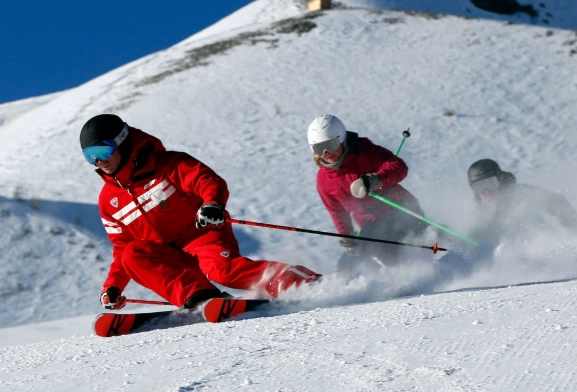
The official framework from bodies like PSIA-AASI is elegant in its simplicity. It breaks down the complex act of skiing into five manageable components. But here's the kicker – you're always using them in combination. They're like instruments in a band; one might take the lead during a turn, but they're all playing together.
Before we dive into each one, let's look at the big picture. This table shows you what each skill is fundamentally about, and why it matters so much, especially when you're trying to figure out what are the 5 skills in skiing for your own progress.
| Skill | What It Controls | The "Beginner's Why" | Common Early Struggle |
|---|---|---|---|
| 1. Gliding & Skidding | How the ski moves along the snow | This is your basic motion. Can you slide forward in control? | Skis crossing, feeling "stuck" or sliding out |
| 2. Turning | Changing direction | You can't just go straight! Turning is how you control speed and pick your path. | Forcing the ski around with the upper body |
| 3. Edge Control | The ski's angle to the snow | This is your "bite" or "grip." More edge = more control on steeper stuff. | Sliding sideways (not enough edge) or catching an edge (too much) |
| 4. Pressure Control | Weight distribution along the ski | Where you put your weight determines how the ski bends and reacts. | Leaning back (in the "backseat") or being too stiff |
| 5. Balance & Stance | Your body's position over the skis | This is your platform. A good athletic stance is the base for everything else. | Being rigid, arms down, or hips too far back |
See how they connect? A good turn requires you to manage your edges and pressure while staying balanced. It's a package deal. Now, let's unpack each skill, starting with the one that feels the most obvious but is often misunderstood.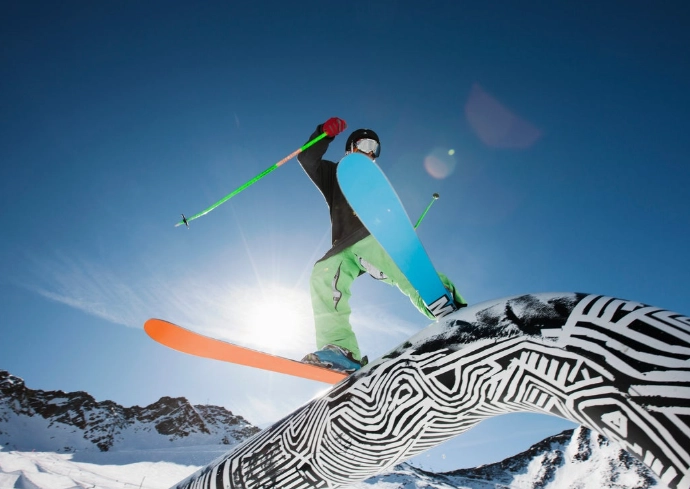
Skill 1: Gliding and Skidding – Your Ski's Two Personalities
This is where it all begins. When your ski is flat on the snow, it wants to glide. When you tilt it on its edge, it wants to grip and potentially skid. Understanding this duality is your first major "aha!" moment.
Gliding is that smooth, forward motion. It's efficient. It's what you do on flat cat tracks or when you're pointing your skis straight down a gentle slope to pick up a little speed. The ski is relatively flat, and it slides with minimal resistance.
Skidding is when the tail of the ski slides sideways a bit during a turn. This is crucial! A controlled skid is how most beginners (and many advanced skiers on certain terrain) control their speed. It's like using the side of your ski as a brake. The problem comes when the skid is uncontrolled—that's a slip or a slide, and it feels scary.
A Personal Mistake: I used to think skidding was bad, a sign I wasn't a "good" skier. So I'd try to force my skis to carve perfectly on ice. The result? I'd either catch an edge and eat snow, or I'd be so tense I'd exhaust myself in an hour. My instructor finally said, "Look, skidding is a tool. On this cruddy snow, you need to skid a little to stay in control." It was a game-changer. Don't fear the skid; learn to manage it.
So, how do you practice this first of the 5 skills in skiing?
Drill for Gliding & Skidding:
On a very gentle, wide slope (the "magic carpet" area is perfect):
- Straight Run: Point your skis straight downhill just for a few feet. Feel the glide. Keep your weight centered, knees slightly bent.
- The Sideslip: Stand across the hill. Gently roll your knees downhill to start slipping sideways. Then roll them back up the hill to stop. This teaches you how edge angle starts and stops a skid. It feels weird at first, but it's pure gold.
- Gliding Wedge: Make a "pizza slice" with your skis. You'll feel the inside edges engage and create a controlled skid that slows you down. This is your first real speed control tool.
Mastering this mix of glide and skid gives you the vocabulary for basic movement. Now, let's use that vocabulary to form a sentence: a turn.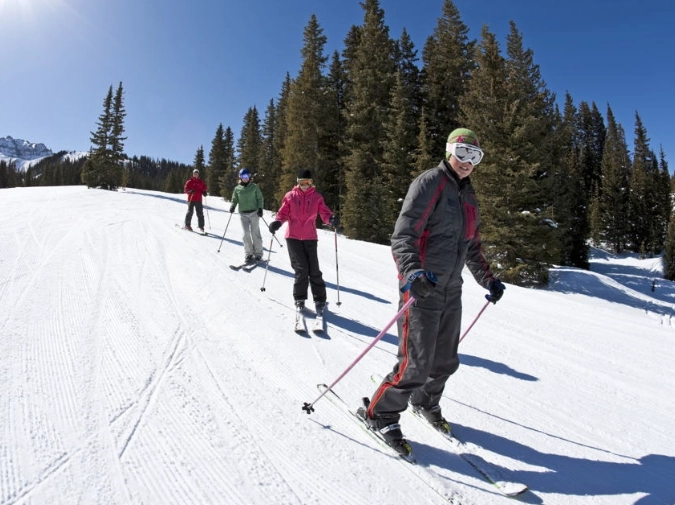
Skill 2: Turning – It’s Not About Muscling Your Skis Around
This is the skill everyone sees and wants. But here's the secret most beginners miss: a turn is initiated by your lower body, not your shoulders. You don't steer a ski like a car; you guide it by changing its bend and edge.
When you're figuring out what are the 5 skills in skiing, turning often feels like the main event. And it is important. But it's the product of the other skills working together. A good turn sequence looks like this:
- Initiation: You gently roll your knees and ankles in the direction you want to go. This starts to release the old edges and engage the new ones. Your upper body? It stays pretty quiet, facing mostly downhill.
- Shaping/Carriage: As the skis come across the hill, you manage the pressure and edge to control the arc of the turn. This is where you control speed.
- Finish/Completion: You bring the skis back across the fall line and prepare to start the next turn. The completion sets you up for the next initiation.
The biggest roadblock I see? People leading with their shoulders. They wrench their upper body around, hoping the skis will follow. What happens? The skis might eventually follow, but you're off-balance, your arms are flying, and you have no control over the turn's shape. It's exhausting.
Try this thought: Imagine your hips are a bowl of soup. You want to keep that soup level, not spill it by twisting your upper body. The turning motion comes from the feet and knees rolling, which tips the skis, not from spinning your torso.
From Wedge Turns to Parallel: The Turning Evolution
Your turning journey will evolve. It's not about jumping straight to a perfect parallel turn.
- Wedge Turn (Snowplough): This is your first controlled turn. You're in a wedge, and you simply apply more pressure to the outside ski (the left ski for a right turn). It's stable and safe for learning.
- Wedge Christie: A transition phase. You start the turn in a wedge, but as you come across the hill, you bring the inside ski parallel to the outside one. It starts to feel more fluid.
- Basic Parallel Turn: Both skis stay parallel throughout the turn. Initiation is done by a simultaneous roll of both knees/ankles. This is where efficient, linked turns really begin.
Each stage builds on the last. Don't rush it. A solid, controlled wedge turn is infinitely better than a sketchy, forced parallel turn.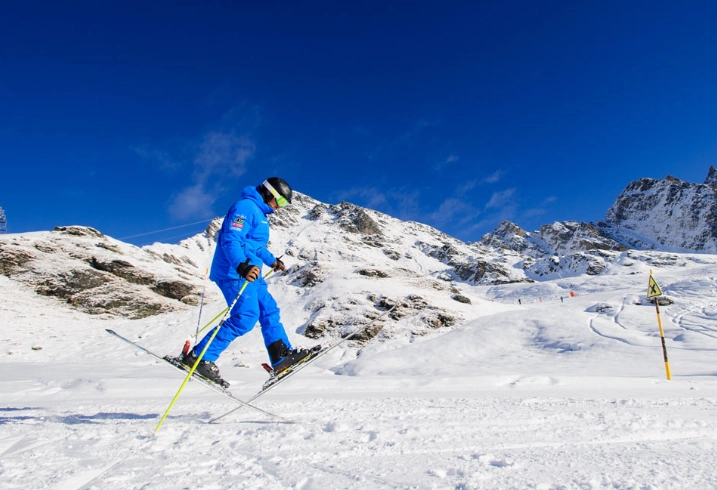
Skill 3: Edge Control – Finding Your Ski’s Grip
If gliding and turning are the verbs, edge control is the adverb. It describes how you're doing those things. Your ski edges are the metal strips on the sides. The more you tilt the ski on its edge, the more it wants to carve an arc into the snow (grip). The flatter the ski, the more it wants to slide (skid).
This skill answers the question: How do I stop sliding sideways on a steeper slope? The answer is edge angle.
Key Concept: Edge control is primarily an ankle and knee movement. You roll your knees into the turn to increase edge angle. You don't lean your whole body in (that usually puts you off balance). Think of it like wringing a towel—a subtle, twisting motion from the joints closest to the ski.
There's a sweet spot. Too little edge on hard snow, and you'll slip out. Too much edge too quickly, especially if your weight is back, and you'll hook the edge and trip yourself. Finding that middle ground is a feel thing that comes with practice.
Here’s a simple way to visualize edge angles:
- Flat Base: Ski is fully on its base. Maximum glide, minimum grip. Good for straight running on easy terrain.
- Low Edge Angle: Slight tilt. The ski will smear or skid through a turn. Great for speed control in bumps or variable snow.
- High Edge Angle: Significant tilt. The ski carves a clean, narrow track. Used for high-speed turns on groomed snow. Requires good balance and pressure control.
You don't need high edge angles as a beginner. Focus on feeling the transition from flat to a little bit of edge to start a turn. That rolling sensation in your ankles is the foundation.
Skill 4: Pressure Control – The Art of Weight Distribution
This is the stealth skill. It's not as obvious as turning, but it's just as powerful. Pressure control is about how you manage your weight along the length of your ski. A ski is designed to flex. Where you put your weight determines how it flexes and, consequently, how it performs.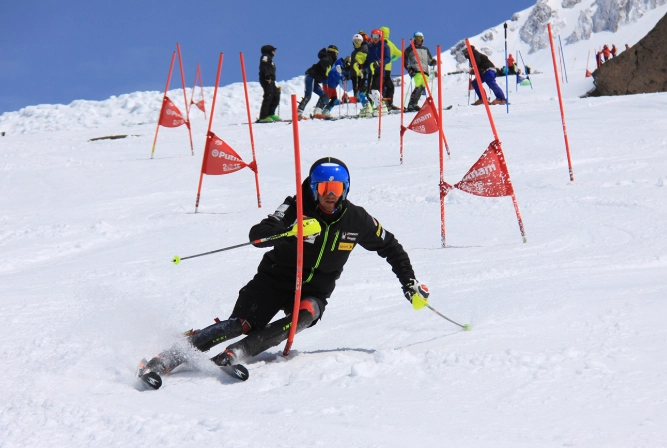
The most common pressure mistake for beginners is being in the "backseat." This means your weight is too far back on your heels, often because you're afraid of the speed in front of you. It feels safer, but it's a trap.
Why is the backseat bad?
When you're in the backseat, you lose control of the front of your skis. They become light and "flappy," making it hard to initiate a turn. Your quads burn out from fighting to stay upright. And if you hit a bump, you'll get launched backward. It's miserable.
The goal is a centered, athletic stance, with the ability to move pressure forward and back as needed. In a typical turn, pressure moves from the center of the ski at the initiation, to the front of the ski as you engage the turn, and then back along the ski as you complete it. This flexing and pressure movement is what creates a powerful, smooth turn.
How to Fix Backseat Skiing (A Simple Drill):
On a gentle slope, practice taking your poles and holding them horizontally in front of you with both hands, like a tray. To hold them level, you have to keep your hands up and forward, which naturally pulls your weight forward over your boots. It feels weirdly effective. Your shins should maintain light contact with the front of your ski boots throughout the turn.
Skill 5: Balance & Stance – Your Platform for Everything Else
This isn't just "standing up." It's an active, ready position. Your stance is the foundation that allows you to apply the other four skills effectively. A good skiing stance is similar to a ready position in tennis or basketball: athletic, relaxed, and ready to move.
Let's describe the ideal neutral stance:
- Feet: About hip-width apart.
- Ankles/Knees/Hips: All softly flexed. You're not squatting, just in a slight, comfortable bend. Imagine you're about to jump sideways.
- Upper Body: Fairly upright, facing mostly downhill. Your chest is open, not hunched.
- Hands & Arms: Held up and forward, in your peripheral vision. This is critical for balance. Dropping your arms pulls your weight back.
- Weight: Centered over the middle of your skis, feeling the soles of your feet.
This stance isn't static. You move within it. You extend your legs to absorb a bump. You flex more to initiate a turn. But you always return to this neutral, balanced home base.
My Pet Peeve: Stiff legs. I see so many beginners (and I was guilty too) locking their knees. It looks tense, and it is. Stiff legs have no shock absorption. Every little bump jars your whole body. You can't control pressure or edges well. The moment you consciously soften those knees, the mountain gets a whole lot friendlier. Seriously, just try it on your next run: repeat "soft knees" in your head.
Putting It All Together: How the 5 Skills Work in a Single Turn
Reading about them separately is one thing. Seeing how they weave together is another. Let's walk through a basic parallel turn on a blue run, highlighting each skill's role.
- Between Turns (Traverse): You're in a balanced, athletic stance. Your skis are on a low edge angle to grip the snow as you slide across the hill.
- Initiation: You decide to turn left. You gently roll your right ankle and knee inward (edge control). This begins to release the old edges. As you start to point down the fall line, you allow your weight to shift slightly forward (pressure control) to engage the tips.
- Shaping the Turn: Now moving down the fall line, you continue to increase the edge angle of both skis, especially the outside (right) ski. You actively manage pressure, feeling it build on the outside ski as it bends. You maintain a strong, balanced stance over your feet, hands forward. The skis, now on a higher edge, begin to carve/skid an arc (turning).
- Completion: As you finish the turn across the hill, you gradually ease off the edge angle and allow your legs to extend slightly, releasing pressure. You return to a neutral, balanced stance, ready to initiate the next turn to the right.
That entire sequence, happening in a few seconds, is a symphony of the 5 skills in skiing. You're not thinking "skill 3, now skill 4." With practice, it becomes one fluid thought: "turn here." But understanding the components lets you diagnose problems. Feeling unstable? Check your balance. Skidding out? Check your edge control and pressure.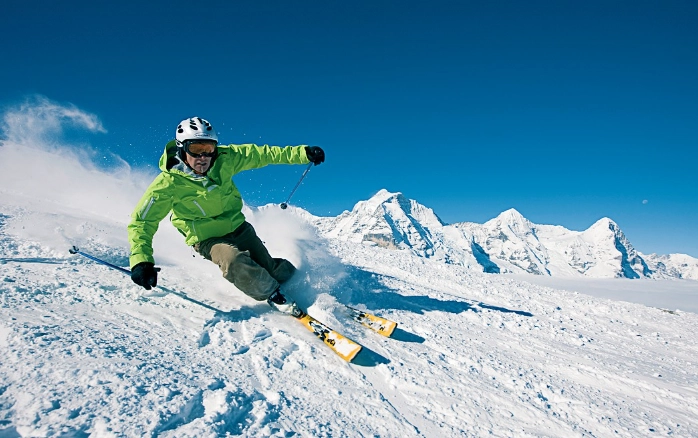
Common Questions About Skiing Skills (FAQs)
Which of the 5 skills is the most important for a beginner?
That's like asking which leg of a chair is most important. But if I had to pick one to focus on first, it's Balance & Stance. Without a good platform, you can't effectively apply any of the others. If your stance is in the backseat with stiff legs and low hands, your gliding, turning, edging, and pressure control will all fight against you. Get into an athletic position first. Everything else gets easier.
How long does it take to master these skills?
Master is a strong word. Even Olympic skiers are refining them. For basic competency—being able to link controlled turns on blue runs—a focused beginner might see huge progress in 3-5 days of lessons. But it's a lifelong journey. You'll work on deeper edge angles, more dynamic pressure control, and balance in challenging terrain for years. Don't get hung up on "mastery." Focus on incremental improvement. Can you make one smoother turn today than yesterday? That's a win.
Can I learn these skills without a ski instructor?
You can, but it's like learning a language without a teacher: slower, more frustrating, and you'll likely develop bad habits that are hard to break. A certified instructor from an organization like PSIA-AASI can see what you're doing wrong in real-time and give you specific drills to fix it. They provide the external feedback you can't give yourself. I'm a huge advocate for at least a couple of lessons to get started on the right path. It's an investment that pays off in faster progress and more fun.
I can ski blues but feel stuck. What skill should I work on?
This is a classic plateau. Most often, the culprit is over-reliance on rotation (muscling turns with the upper body) and not enough edging with the lower body. You're probably skidding all your turns. To progress to steeper terrain or harder snow, you need more grip. Focus on quieting your upper body and practicing rolling your knees and ankles to set your edges earlier in the turn. Drills like "railroad tracks" (trying to make two clean, parallel lines in the snow) on a gentle slope force you to use edge control, not just rotation.
Are these the same 5 skills for snowboarding?
The concepts are similar but applied differently due to the equipment. Snowboarding also has fundamental skills like pressure control, edge control, and rotational control, but they are framed for a single board and a sideways stance. The governing body for snowboard instruction, AASI (part of PSIA-AASI), has its own skill model tailored to the sport. So while the physics of interaction with snow are related, the specific skills and movements are distinct.
Final Thought: It's a Framework, Not a Checklist
Don't get overwhelmed by trying to perfect each of the 5 skills in skiing in isolation. That's not the point. The model exists to give you and your instructor a shared language to talk about skiing. When something feels off, you can ask: Is it my balance? My edges? My pressure? It turns a feeling of "this is hard" into a solvable problem. Take it one run, one turn, one skill at a time. The mountain isn't going anywhere. The goal is to enjoy the process of learning as much as the skiing itself. Now get out there, find some soft snow, and play with these ideas. You've got this.