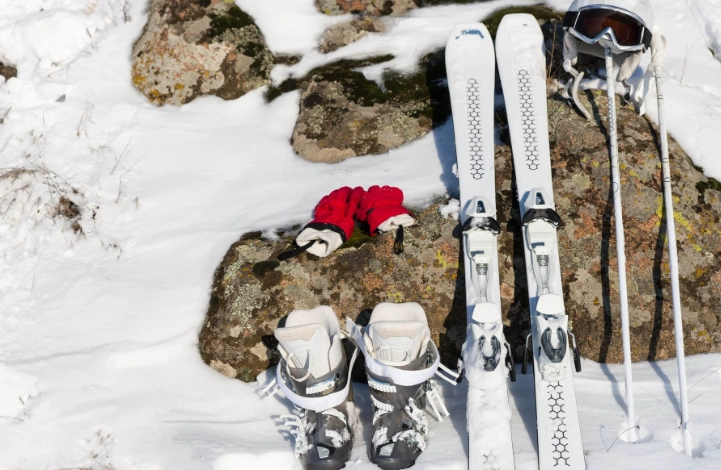
You see "120cm" printed on a ski pole and wonder—is this my size? It's a common length you'll find on rental racks and in many online stores. But grabbing a 120cm pole just because it's there is a gamble. The right pole length feels like an extension of your arms, giving you rhythm, balance, and power. The wrong length? It throws off your entire stance, wastes energy, and can even be a safety risk.
What's Inside This Guide
Why 120cm is a Common Benchmark
Think of 120cm as the "medium" in a world of ski pole sizes. It's not arbitrary. For the average adult skier—someone roughly between 5'7" and 6'0" (170cm to 183cm tall)—the traditional sizing formula often points to a pole length around 115cm to 125cm. The classic method is to flip the pole upside down, grip it under the basket, and see if your forearm is parallel to the floor with your elbow at a 90-degree angle. For many, 120cm hits that sweet spot.
Manufacturers produce a lot of 120cm poles because it's a high-demand size. Rental shops stock them heavily for the same reason. This availability makes it a convenient default, but convenience isn't the same as correctness.
A subtle mistake I see all the time: Skiers standing perfectly upright on flat ground to check pole length. Your skiing stance is dynamic—knees bent, hips forward, back angled. A pole that feels perfect while you're standing like a statue will be too long once you're in an athletic, ready position. Always test in your skiing posture.
Who Should (and Shouldn't) Use 120cm Poles
Let's get specific. A 120cm ski pole isn't a universal fit. It's a tool for a specific range of people and purposes.
The Ideal User Profile
If you match most of this profile, 120cm could be your starting point:
- Height: Around 5'9" to 5'11" (175cm to 180cm). This is the core range.
- Discipline: Primarily alpine (downhill) skiing on groomed runs.
- Skill Level: Intermediate to advanced recreational skier. Beginners might benefit from a slightly shorter pole for easier maneuverability.
- Boot Sole Thickness: Using modern alpine boots. Thicker soles effectively shorten your pole.
Who Should Look Elsewhere
Seriously consider a different length if:
- You are under 5'7" or over 6'1". The traditional math likely points you to 115cm or below, or 125cm and above.
- You ski moguls aggressively. Most bump skiers go 5-10cm shorter than their alpine length for quicker pole plants and less interference.
- You are a dedicated freestyle or park skier. Shorter poles are standard to avoid catching on rails and jumps.
- You primarily do cross-country (Nordic) skiing. The technique and sizing are completely different. A 120cm pole is almost certainly too short for classic or skate skiing.

The Correct Way to Size Your Ski Poles
Forget the old "upside down" trick if you're alone. Here's the method I've used for years that actually works:
- Put on your ski boots. This is non-negotiable. Your height in boots is your skiing height.
- Stand on a flat, hard surface (not deep carpet).
- Hold the pole right-side up, gripping the handle naturally.
- Get into your natural skiing stance: knees flexed, shins pressing the boot tongues, hips forward, back slightly rounded.
- Lift your arm so your forearm is roughly parallel to the ground, elbow at 90 degrees.
- Now look down. The tip of the pole should be touching the ground. If you have to raise your shoulder or dip your wrist to make contact, the pole is too long or too short.
That's your functional length. If you're between sizes, err on the side of shorter. A slightly short pole is easier to manage than one that's too long, which can catch behind you and pull you off balance.
Adjustable vs. Fixed-Length 120cm Poles
This is a key decision. You'll find 120cm as both a fixed length and within the range of adjustable/telescopic poles.
| Feature | Fixed-Length 120cm Poles | Adjustable Poles (e.g., 95-125cm) |
|---|---|---|
| Best For | Dedicated alpine skiers who know their perfect size. The skier who owns one pair for one purpose. | Beginners, growing kids, frequent travelers, backcountry skiers, or anyone who skis multiple disciplines (e.g., resort one day, touring the next). |
| Weight & Feel | Generally lighter and more rigid. Better energy transfer on each plant. Feels like a precision tool. | Slightly heavier due to mechanism. Can have a tiny bit of flex or play at the joint. The trade-off for versatility. |
| Durability | Higher. No moving parts to fail or freeze. I've had fixed poles last a decade. | Good, but the adjustment mechanism is a potential failure point. Keep it clean and check locking levers. |
| My Take | If 120cm is your ideal resort length and you never adjust, go fixed. The performance is superior. | If the 120cm setting is just one of several you use, adjustables are a fantastic, practical choice. Don't let purists shame you. |
Technique Tips for Different Terrain
Using a 120cm pole effectively means adapting your technique. Here’s how I think about it on the mountain.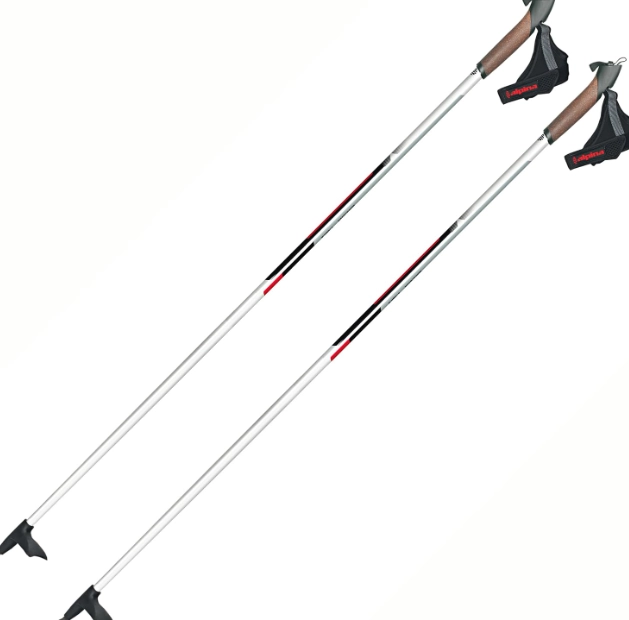
On Groomers & Carving
This is where a correctly sized 120cm pole shines. Use a forward, assertive pole plant to initiate your turns. The pole should plant just ahead of and to the side of your boot. If you're reaching or stabbing awkwardly, your length might be off. A good plant with a 120cm pole sets your rhythm and helps you engage your edges.
In Moguls & Steeps
Even if 120cm is your perfect groomer length, it might feel long here. The key is a quick, light tap, not a deep plant. Your arms stay closer to your body. Focus on using the pole more for timing and balance than for leverage. If you constantly feel like the pole is getting in the way or planting too late, consider a dedicated shorter bump pole (around 110-115cm).
For Flat Traverses & Uphill Sections
This is a hidden benefit of not having poles that are too long. On a flat cat-track, you can use a comfortable, efficient poling motion without over-reaching. For short uphill pushes, you can get good purchase without straining your shoulders.
Personal story: I once spent a season on poles that were 5cm too long (my own fault, ordered online without checking). My lower back ached by lunch every day. I couldn't figure out why until a coach pointed out my posture was compromised—I was subtly leaning back to accommodate the long poles. Switched to the right length, and the pain vanished. Your body knows.
Maintenance & Safety Checklist
Buying the right 120cm pole is step one. Keeping it safe is step two.
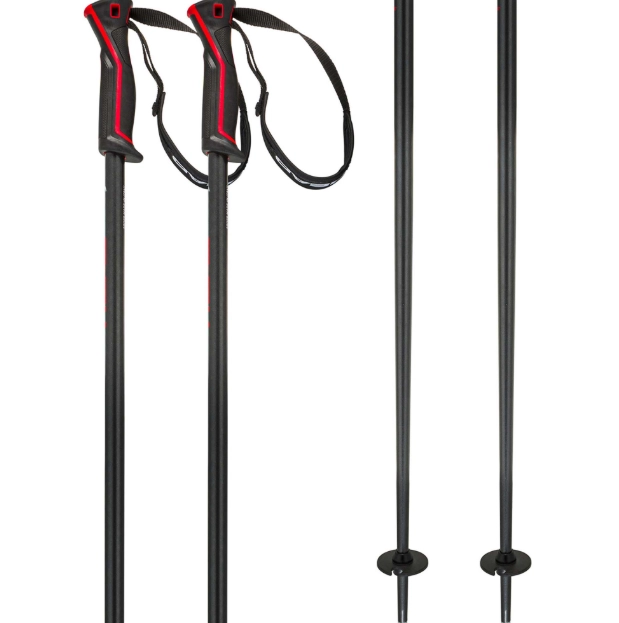
- Baskets: Check for cracks. Small powder baskets are fine for groomers, but if you venture off-piste, consider wider baskets to prevent sinking.
- Grips & Straps: Ensure the strap is comfortable and the buckle works. Modern safety straps are designed to detach in a bad fall. Don't use old-fashioned non-releasable straps.
- Shaft: Run your hand down it. Feel for any dents, deep scratches, or bends, especially near the tip. Aluminum poles can bend back, but carbon fiber often splinters and should be replaced.
- Tips: The carbide tip should be sharp and intact. A worn-down tip is dangerous on ice. They can often be replaced.
- For Adjustable Poles: Before each trip, extend and collapse each section, clean out dirt/snow, and ensure the locking mechanism clicks firmly into place. A collapsed pole on a steep slope is useless.
Expert Q&A: Your Questions Answered
The bottom line? A 120cm ski pole is a fantastic piece of equipment—for the right person. Don't let it be a default. Use the functional sizing method, consider your primary terrain, and decide between fixed and adjustable based on your actual needs. When the length is dialed in, you'll stop thinking about your poles and start using them to ski better. That's the real goal.