Quick Guide
- More Than Just a Metal Bar: The Anatomy and Mechanics
- Why Do Ski Resorts Even Bother? The Pros and Cons
- T-bar Lift vs. Chairlift: A Side-by-Side Smackdown
- Okay, I'm Convinced I Need to Try It. How Do I Not Wipe Out?
- Digging Deeper: The Tech and Safety Stuff
- A Quick Tour of Who Makes These Things
- The Final Run: Are T-bar Lifts Worth the Hassle?
If you've ever stood at the base of a beginner or intermediate slope, looking up at a moving cable with these inverted "T" shaped bars swinging around, and thought, "What on earth is that thing and how do I not embarrass myself on it?" – you're not alone. That, my friend, is a T-bar lift. And it's one of those ski hill fixtures that causes more first-timer anxiety than a black diamond run.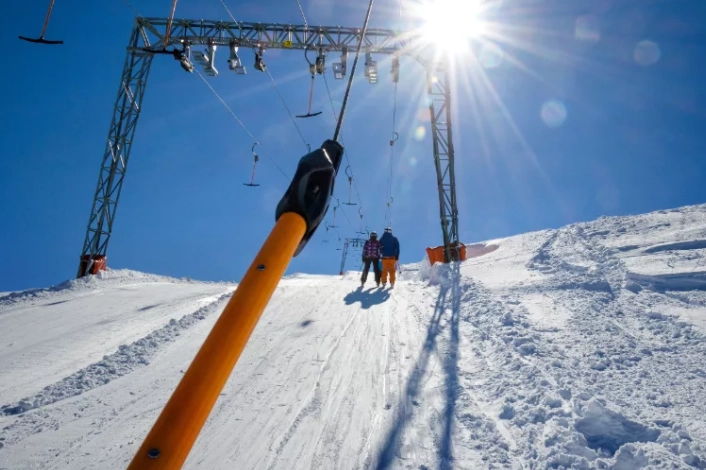
I remember my first encounter vividly. I was twelve, feeling pretty confident on my skis after a week of lessons. Then my dad pointed to this contraption and said, "Time to try the T-bar." The confidence evaporated. It looked archaic, slightly menacing, and the line of people ahead of me seemed to include at least two who spectacularly bit the snow. So, what are T-bar lifts, really? They're surface lifts, a type of cable-driven system where you stand on your skis or board and a moving T-shaped bar pulls you up the hill, with the horizontal part of the T tucked behind your... well, your rear end.
More Than Just a Metal Bar: The Anatomy and Mechanics
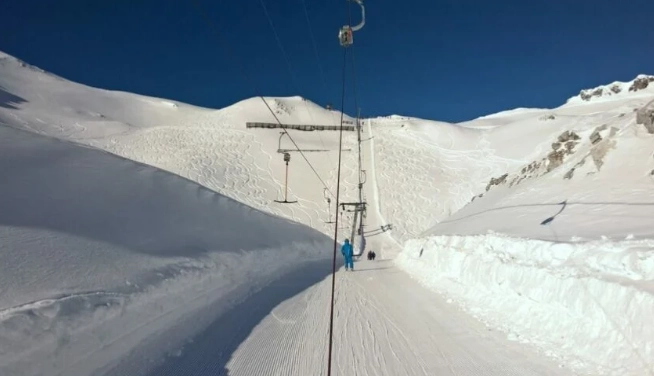
Let's break it down, because understanding how it works is half the battle of using it without face-planting. At its core, a T-bar lift is beautifully simple. A powerful electric motor (usually housed in the top station) drives a continuous steel cable loop that runs between two large bullwheels – one at the top, one at the bottom. Attached to this cable at regular intervals are the T-bars themselves. When not in use, they hang or are stored on a slow-moving return cable.
The magic (or terror) happens at the loading area. You and your partner (they're almost always built for two, though single rider "J-bars" or "platter pulls" exist) ski into position. The attendant grabs a swinging T-bar and guides it to you. The horizontal bar goes behind both of you, and you each take a side of the vertical pole. A clamp or grip on the pole attaches it to the moving cable, and off you go, dragged up the slope while standing on your own equipment.
The simplicity is its greatest strength and its main drawback. It's cheap to build and run compared to a high-speed quad chairlift. It needs minimal infrastructure – just the towers, the cable, and two simple stations. It can be installed on slopes that are too flat, too windy, or too narrow for a chairlift. But that simplicity puts the onus on the rider. If you fall, the lift doesn't stop for you (usually). You just let go, scramble to the side, and watch your bar continue its journey without you, feeling a mild sense of abandonment.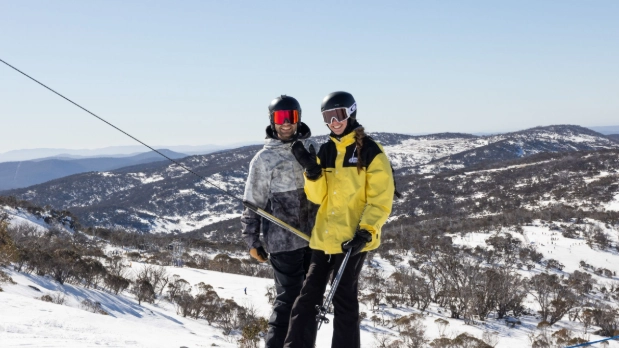
Why Do Ski Resorts Even Bother? The Pros and Cons
You might be wondering, in an age of heated gondola cabins and chairs with weather bubbles, why these things still exist. There are solid reasons, but also some real frustrations.
The Upsides (From the Resort's and Skier's Perspective)
Cost-Effective: This is the big one. Installing a T-bar is a fraction of the cost of a chairlift. The maintenance is simpler and cheaper too. For a resort, it's a budget-friendly way to service a key slope.
Wind Resistant: Ever been on a mountain when all the big chairs are on wind hold? It's miserable. T-bar lifts have a much lower wind profile. Their cables are close to the ground, and there's no giant chair swinging in the breeze. They often keep running when everything else shuts down, becoming a lifeline for getting in some turns on a stormy day.
Terrain Flexibility: They can go places chairs can't. Very gentle, beginner-friendly slopes are perfect for T-bars. They're also common on cat tracks or long, flat traverses where a chairlift would be overkill.
Keeps Beginners in Their Zone: It's a gentle introduction to lift-served skiing. The slope underneath is almost always a green or easy blue. Falling isn't a big deal (just a bruised ego). It's a stepping stone before tackling a detachable chairlift.
The Downsides (The Stuff Nobody Talks About Enough)
The Learning Curve: Let's be honest, they're not intuitive. The stance feels weird. Leaning back is a natural instinct that leads directly to a fall. It takes a few goes to get it right, and those few goes can be frustrating and very public.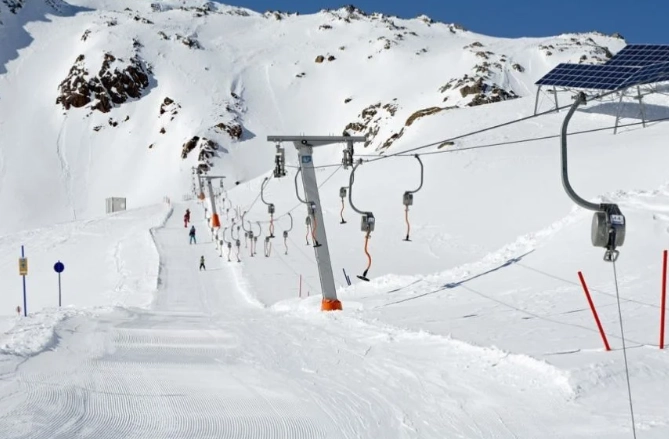
Snowboarder's Nemesis: For skiers, it's awkward. For snowboarders, it can feel like a cruel joke. Riding with one foot out of the binding (your back foot) is an exercise in balance and calf strain. Many resorts now have "carpet" lifts for beginner areas because of this.
Comfort (or Lack Thereof): That metal bar isn't padded. On a long ride, it can get uncomfortable. And if you're mismatched with a partner of a different height, someone is going to have an awkward ride.
Exposure: No shelter from the elements. It's just you, the bar, and whatever weather the mountain throws at you. On a cold, windy day, a T-bar ride can feel very, very long.
My personal pet peeve? The infamous "T-bar tow" – that burning sensation in your thighs if you don't relax and let the bar do the work. You end up fighting it, muscles tense, and by the top your legs are jello before you even make a turn.
T-bar Lift vs. Chairlift: A Side-by-Side Smackdown
It's not really a fair fight, but seeing the differences laid out helps explain their respective roles on the mountain.
| Feature | T-bar Lift | Detachable Chairlift |
|---|---|---|
| Primary Function | Tow riders up gentle/medium slopes | Transport riders efficiently up major mountain faces |
| Rider Experience | Active, standing, exposed to weather | Passive, seated, often with a safety bar and potential weather shield |
| Learning Curve | Moderate to High (requires specific technique) | Low (easier for first-timers to grasp) |
| Wind Tolerance | Very High – often runs in high winds | Low – frequently goes on wind hold |
| Terrain Suitability | Low-angle slopes, cat tracks, beginner areas | Steep, long vertical rises |
| Capacity & Speed | Lower capacity, slower speed (for safety) | High capacity, high speed (e.g., 1000+ people/hour) |
| Cost (to build/operate) | Low | Very High |
| Snowboarder Friendliness | Poor (requires one foot out) | Excellent |
The table makes it clear. Asking "what are T-bar lifts?" is really asking about a specific tool for a specific job. They're not trying to be chairlifts. They're the reliable, economical, weatherproof workhorse for specific terrains. A resort might have a flashy gondola to get you to the summit, but it's the network of T-bars and rope tows that service the learning areas and connector trails.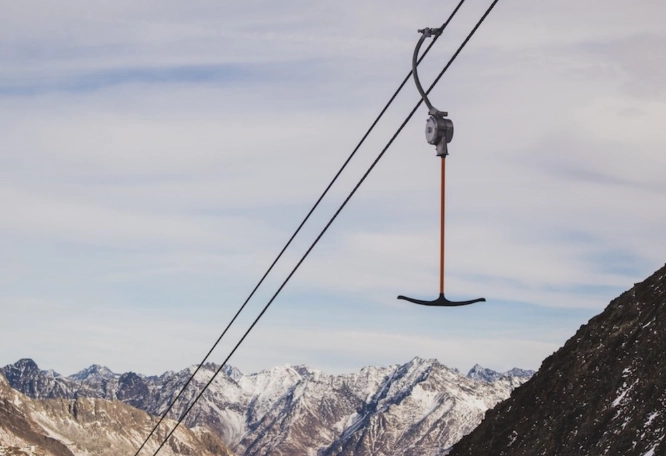
Okay, I'm Convinced I Need to Try It. How Do I Not Wipe Out?
This is the part you actually came for, right? The step-by-step, no-BS guide. Forget the overly technical manuals. Here’s how it goes down.
For Skiers:
- Partner Up & Get Ready: Find a partner of roughly similar height. It helps. Both of you, poles in your outside hand (the hand away from your partner). Look back for the approaching bar.
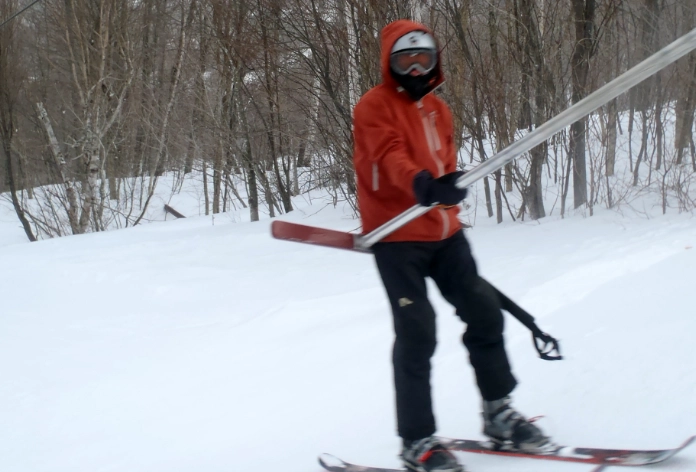
- The Grab: As the attendant guides the bar to you, don't reach or lunge. Let it come to you. Each of you grabs the vertical pole with your inside hand, around waist height. The horizontal bar should settle comfortably behind your rear, not behind your knees.
- The Launch - The Most Critical Part: As the bar takes up slack and starts to pull, lean forward slightly. I know it feels wrong. Do it anyway. Keep your skis parallel, pointed straight up the track. Bend your knees a little, like you're in a slight athletic stance. Let the bar pull you. Do NOT sit on it. It's a tow, not a seat.
- The Ride: Relax your legs. Look ahead up the track, not down at your skis. If you hit a bump, absorb it with your knees. If you feel yourself being pulled backward, lean forward more, don't pull back on the bar.
- The Exit: As you approach the top, the slope will flatten. The bar will naturally push you forward. Start poling gently. At the clearly marked exit point, simply let go of the pole and ski smoothly away to the side. Your partner does the same. Don't stop right in the exit lane!
For Snowboarders (You Brave Souls):
- Preparation: Strap your front foot in tightly. Your back foot rests on the board, usually just in front of the rear binding. Some people like it on the binding itself for stability.
- Stance: You'll be riding in a sort of surfy, sideways stance. Your body will be twisted slightly to face up the hill. It's awkward.
- The Grab & Pull: Grab the pole with your front hand. The bar goes behind your front thigh/buttock. The pull will try to twist your board straight. You need to use your edges to fight this and keep a slight traverse angle. It's a constant, subtle pressure on your front foot and edges.
- The Ride & Exit: It's a workout for your front calf. Focus on keeping balanced over your front foot. Exiting is the same – let go and ride away. Many snowboarders prefer to ride alone on a single T-bar if available, as it gives more control.
Digging Deeper: The Tech and Safety Stuff
If you're a gearhead or just curious about what keeps you safe, here's a peek under the hood. Modern T-bar lifts are governed by strict safety codes. In North America, that means adherence to standards from the National Ski Patrol and guidelines that align with the American National Standards Institute (ANSI) B77.1 for passenger ropeways. In Europe, similar EU machinery directives apply.
The safety systems are robust. There are emergency stop buttons all along the line and at both stations. The drive motor has multiple braking systems – service brakes, emergency brakes, and a backup mechanical brake that engages if power fails. The cable itself is constantly monitored for tension and wear. Those towers you see aren't just holding the cable up; they have sheaves (wheels) with sensors to detect if the cable jumps its track, which triggers an immediate shutdown.
What does this mean for you? It means that while riding a T-bar lift might feel rickety and old-school, the underlying machinery is subject to rigorous daily inspections and maintenance. The main risks are personal – falls, collisions in the line, or not getting off correctly. The lift itself is a highly regulated piece of equipment.
Common Questions About T-bar Lifts (The Stuff You Actually Want to Know)
Let's tackle some of those burning questions that pop up when you're searching for info on what T-bar lifts are.
A Quick Tour of Who Makes These Things
It's a specialized industry. A few major global players dominate the market for building and installing surface lifts like T-bars. Knowing the names adds a bit of context when you're riding one.
The Austrian-Swiss behemoth. If you've been on a lift, chances are it's a Doppelmayr. They make everything from tiny T-bars to the world's largest gondolas. Their T-bars are known for smooth drives and reliable grips.
The other giant, also with European roots (Italian and French). They are Doppelmayr's primary competitor and have a similarly comprehensive product line, including modern, low-energy T-bar systems.
A key player in the North American market. They specialize in surface lifts, parts, and modernization of existing systems. Many older T-bars at North American hills run on BMF components.
These companies don't just drop off a lift and leave. They provide the engineering, manufacturing, installation, and often long-term maintenance support. When a resort invests in a new T-bar, they're buying into a decades-long partnership with one of these firms.
The Final Run: Are T-bar Lifts Worth the Hassle?
So, after all this, what's the verdict on T-bar lifts? They're a mixed bag, but an essential part of the skiing ecosystem.
For a beginner, they can be a hurdle. There's no sugarcoating it – your first few attempts might be wobbly and end in a spill. But mastering one is a genuine skiing rite of passage. It teaches balance, forward stance, and confidence. It opens up new parts of the mountain that a magic carpet can't reach.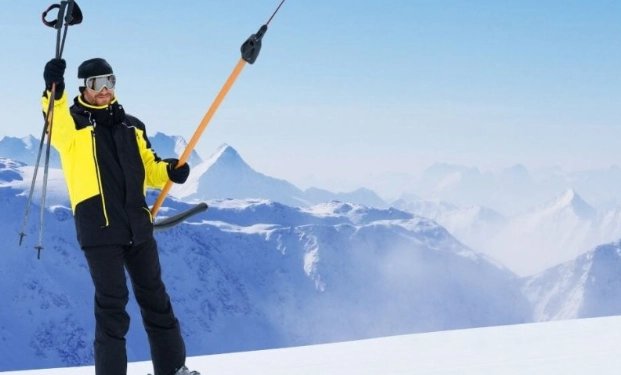
For an experienced skier or rider, they're a tool. On a windy day, they're your best friend. They provide access to quiet, classic runs that the crowds on the high-speed quads often ignore. There's a certain nostalgia and simplicity to them that I've come to appreciate, even if I still prefer the comfort of a chair on a cold day.
Understanding what T-bar lifts are – their purpose, their mechanics, and their technique – demystifies them. It turns a source of anxiety into just another piece of mountain infrastructure to be used and respected. Next time you see one, you won't just see a weird metal T swinging around. You'll see a cost-effective, wind-proof workhorse that's been getting people up hills for over a century, and with the right technique, it'll get you up there too.
Just remember: lean forward, relax, and let it pull you.